
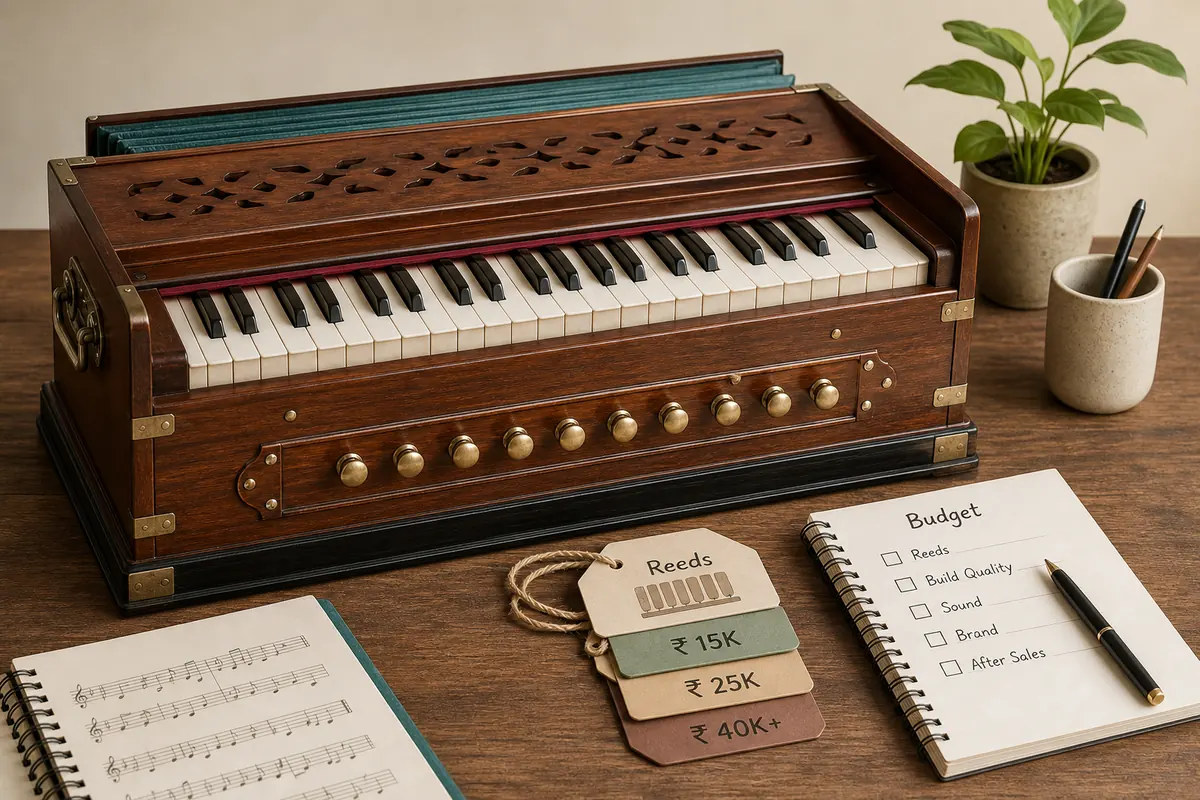
Quick answer: how much should a beginner spend on a harmonium?
For many beginners, a practical starter budget is about $300-$700 for a simple playable harmonium, while stronger student or intermediate instruments often sit around $700-$1,200. Premium, scale-changing, custom, or concert-grade models can move well above that.
In India-facing listings, beginner and student harmoniums often appear from roughly ₹12,000-₹35,000, while better reed sets, scale changers, premium wood, and export-ready builds can push the price higher. These ranges change by seller, city, shipping, tuning, and condition, so use them as planning ranges rather than fixed quotes.
The cheapest harmonium is not always the best beginner harmonium. If the bellows leak, one reed buzzes, or the keyboard action is uneven, the real cost includes repair time and frustration. A slightly higher price can be reasonable when it includes stable tuning, clear reeds, a usable bag, and a seller who understands the instrument.
The safest first decision is to buy the simplest harmonium that supports your current practice. If you are learning Sa Re Ga Ma, bhajan lines, or first raga phrases, you usually do not need a complex scale changer immediately. Start with a reliable tone, then use the harmonium notes for beginners guide and the online harmonium keyboard to understand the layout before paying for upgrades. Once you know your budget, use the best harmonium for beginners buying guide to compare reeds, bellows, portability, key action, and seller checks without duplicating this price research.
Common harmonium price ranges and what they usually mean
Prices vary widely because harmoniums are sold as new imports, local shop instruments, used marketplace listings, handmade models, and refurbished older instruments. Marketplace pages such as Reverb describe harmonium prices as ranging from a few hundred dollars to several thousand dollars depending on age, materials, brand, and construction quality. Large marketplaces such as Amazon and Etsy also show many beginner and portable models clustered in the low-to-mid hundreds, while specialty sellers list higher student and professional models.
Use the table below as a buyer's map. It is not a promise that every instrument in a tier is good. It simply explains what a price band often signals and which buyer should look there first.
| Budget band | What you may find | Best fit |
|---|---|---|
| Under $300 or under ₹12,000 | Small, used, damaged, very basic, or uncertain listings. Quality can vary sharply. | Only if you can inspect it or accept repair risk. |
| $300-$700 or ₹12,000-₹35,000 | Beginner and student harmoniums, often portable, usually enough for first practice if tuning is stable. | Most new learners who need a real instrument without overbuying. |
| $700-$1,200 or ₹35,000-₹80,000 | Better reeds, stronger casework, more stops, couplers, or export-ready builds. | Regular students, teachers, kirtan singers, and players who already practice often. |
| $1,200+ or ₹80,000+ | Premium wood, scale changers, specialty reeds, custom builds, or professional concert instruments. | Advanced users who know the exact tone, key range, and service needs they want. |
What changes the price of a harmonium?
The largest price differences usually come from reeds, build quality, portability, tuning work, and extra mechanisms. Two listings can both say double reed or nine stops, yet sound and feel very different. The specification matters, but the actual instrument matters more.
Reeds are especially important because they shape tone, tuning stability, and response. A better reed set can make slow practice more pleasant, while poor reeds can buzz or feel uneven. Stops and drones add flexibility, but a beginner should not pay mainly for a large number of knobs. Many knobs do not automatically mean better sound.
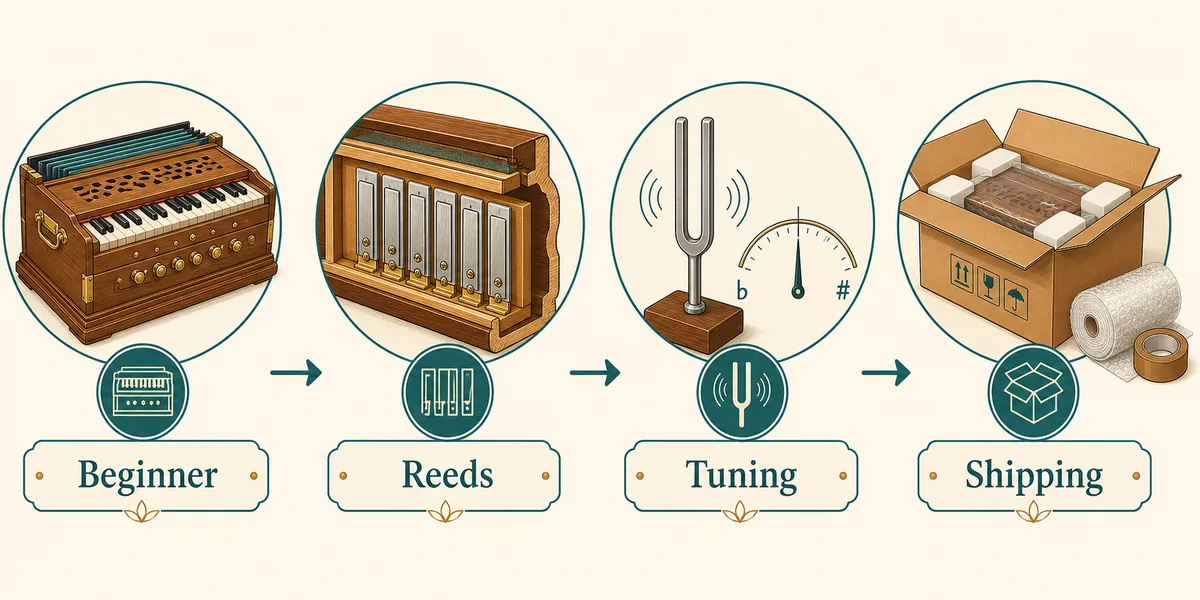
| Factor | Why it affects cost | Beginner advice |
|---|---|---|
| Reed quality | Better reeds usually respond more evenly and hold tuning better. | Prioritize clean, stable tone over extra decorative features. |
| Number of reed banks | Two or three reed sets can make the sound fuller but add cost and maintenance. | A reliable two-reed instrument is often enough for learning. |
| Stops and drones | They route air to reed sets or fixed support notes. | Useful, but do not buy based on knob count alone. |
| Scale changer | Lets the keyboard shift pitch mechanically. | Helpful for advanced accompaniment, often unnecessary for a first instrument. |
| Wood and casework | Stronger construction improves stability and durability. | Check for leaks, loose panels, and warped keys. |
| Shipping and customs | Large wooden instruments can be expensive to ship and risky to return. | Budget for packing, insurance, import charges, and local service. |
New vs used harmonium: where price can mislead you
A new harmonium usually gives you a clearer return path, current tuning, and less uncertainty. The downside is that the price may include shipping, marketplace fees, and seller markup. A used harmonium can be excellent value, especially if it was maintained by a serious player, but condition is everything.
When buying used, ask for a short video of every key, the bellows held under pressure, and all stops opened one by one. Listen for silent notes, buzzing reeds, uneven volume, slow response, and air leaks. A listing that looks cheap can become expensive if it needs reed work or bellows repair before it is playable.
-
1
Ask for a full-key sound test
Every key should sound clearly at a steady bellows pressure.
-
2
Check bellows and air leaks
The tone should not collapse immediately when pressure is held.
-
3
Confirm tuning reference
Ask whether the instrument is tuned near A440 or another standard used by the seller.
-
4
Price the repair path
If no local harmonium technician is available, repairs may cost more than the discount.
Best beginner budget: what to buy first and what to skip
For a first harmonium, spend enough to get stable sound and comfortable practice. Do not overspend on a scale changer, rare reed combination, or large decorative case before you know how you will use the instrument. If your practice is mostly pitch checking and note reading, a simple playable model plus an online practice routine may be a better start than an expensive instrument that stays unused.
A good beginner setup includes the instrument, a padded bag or cover, a safe place to store it, and possibly a first tuning or service check. If you are ordering internationally, add shipping and return risk before deciding whether the price is truly low.
Practical rule: choose tone and reliability first, portability second, and advanced features last.
If you are not sure whether harmonium is the right instrument for you, practice note direction first with the online keyboard, then buy once you know your real use case.
Total harmonium cost: India price, shipping, and service checks
Similarweb keyword data shows that harmonium price, harmonium price in India, harmonium instrument price, cost of a harmonium, and cost of harmonium all belong to the same buying-research intent. Keep them on one price guide unless the user is looking for a specific city, seller, or brand price list.
When comparing harmonium price in India with an imported listing, add the total landed cost: instrument price, packing, shipping, customs or tax, return risk, tuning after shipping, and the availability of a local repair person. A lower sticker price can lose its advantage if the instrument arrives out of tune or cannot be serviced nearby.
| Question | Why it changes the real cost | Best beginner action |
|---|---|---|
| Is this a local India listing or an export listing? | Export packing, shipping, and returns can change the final price sharply. | Compare total delivered cost, not only the product page number. |
| Does the seller show every key in a video? | A cheap instrument with buzzing reeds or air leaks may need immediate repair. | Ask for a slow full-key test before paying. |
| Are reeds, stops, and scale changer clearly described? | Better reeds and scale changers raise cost, but not every beginner needs them. | Pay for stable tone first and advanced features later. |
How to check current harmonium prices before you buy
Because listings change quickly, check several current marketplaces and at least one specialist seller before treating any guide as final. Compare similar specifications: octave range, reed banks, stops, coupler, scale changer, bag, shipping, return policy, seller history, and whether the instrument is new, used, or refurbished.
The sources below are useful as market checks, not endorsements. Prices, availability, shipping, and seller quality can change, so verify the exact listing on the day you buy.
- Reverb harmoniums marketplace - current new and used listings with broad used-market price variation.
- Amazon harmoniums category - large-marketplace examples of beginner and portable harmonium listings.
- Maharaja Musicals harmoniums - specialist seller examples showing price bands for student and premium harmoniums.
Harmonium price FAQ
What is a good harmonium price for beginners?
A practical beginner budget is often about $300-$700 or roughly ₹12,000-₹35,000, depending on country, seller, tuning, and shipping. Spend for stable tone and usable condition before paying for advanced features.
Is a cheap harmonium worth buying?
It can be worth buying if it plays every note, holds air, stays reasonably in tune, and has a clear repair path. If it needs reed or bellows work immediately, the final cost may be higher than a better starter model.
Why are some harmoniums so expensive?
Higher prices often come from better reeds, stronger woodwork, more reed banks, scale-changing mechanisms, custom construction, professional tuning, and export or shipping costs.
Do beginners need a scale changer harmonium?
Usually no. A scale changer is useful for some advanced accompaniment situations, but most beginners should first learn Sa, keyboard direction, and steady phrase practice on a simpler instrument.
Can I practice before buying a harmonium?
Yes. Use the online harmonium to learn the keyboard layout, Sa Re Ga Ma, and simple phrase direction. Then buy a physical harmonium when you know you need bellows feel, reed response, and regular hands-on practice.
Is harmonium price in India the same as the cost for overseas buyers?
No. Harmonium price in India can be much lower than the final overseas cost because export packing, shipping, customs, return risk, and tuning after transit may add a lot. Compare the delivered and serviceable cost before deciding.
Test the keyboard layout before you buy
Use Web Harmonium to learn note direction, choose Sa, and understand whether you need a simple beginner instrument or a more advanced harmonium.
Open the online harmonium