

Quick answer: what chords should a beginner learn on harmonium?
Start with simple major and minor triads: root, third, and fifth. On harmonium, these chords are most useful as soft support for a voice, bhajan line, or practice drone, not as heavy piano-style blocks.
If you know where Sa is, you can first build one safe shape from the root. For a C-as-Sa practice map, C-E-G gives a bright major sound, while C-E flat-G gives a minor sound. Move the same idea only after the sound is stable.
A harmonium can play chords because several keys can sound together. The harder question is when a chord helps. In Indian vocal, bhajan, kirtan, and raga-adjacent practice, the melody and Sa usually matter more than thick harmony. Use chords lightly so they support the singer instead of covering the line.
This guide keeps the chord idea practical. You will learn how to identify the root, choose the third, add the fifth, test the sound on the online harmonium keyboard, and avoid chord habits that make a simple melody feel crowded.
What is a harmonium chord?
A chord is two or more notes played at the same time. The most common beginner chord is a triad, which uses three notes: the root, the third, and the fifth. The root names the chord. The third decides much of the mood. The fifth makes the chord feel stable.
On harmonium, this is easier to understand when you already know the key map. If C is your starting Sa, the white-key C major shape is C-E-G. If the melody needs a softer minor color, lower the third to E flat and keep C and G steady.
| Chord part | Job in the chord | C-as-Sa example | Practice cue |
|---|---|---|---|
| Root | Names the chord and anchors the sound | C | Hold it as your home point |
| Third | Creates major or minor color | E or E flat | Listen for bright vs soft color |
| Fifth | Adds stability without changing the basic mood | G | Add it after the root and third feel clear |
| Octave | Optional duplicate of the root | C above | Use only when the sound needs more weight |
Build a beginner chord shape from root, third, and fifth
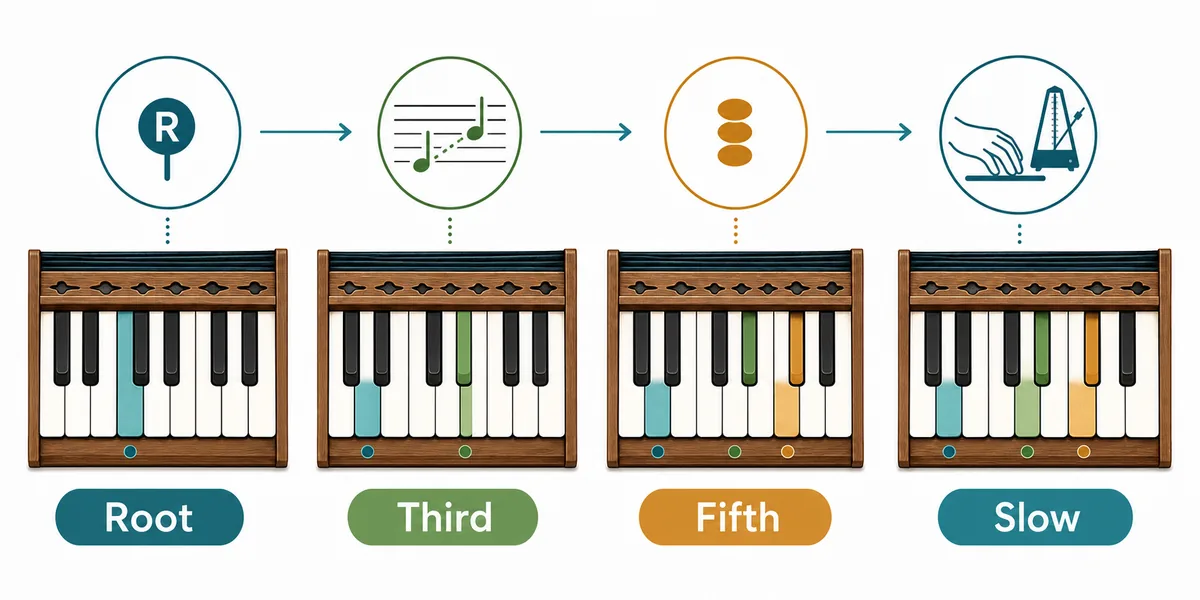
Do not begin by memorizing dozens of chord names. Choose one root, add the third, then add the fifth. Play each note separately first, then together. This keeps your ear involved instead of turning the chord into a finger puzzle.
The flow below works on a physical harmonium or in the browser. Start slowly, keep the chord quiet, and release cleanly before the next melody phrase.
-
1
Choose the root
Pick the note that feels like home for the phrase, often Sa or the chord name.
-
2
Add the third
Use the natural third for a major color or lower it for a minor color.
-
3
Add the fifth
Keep the fifth steady and listen for a stable, settled chord.
-
4
Play under one phrase
Hold the chord softly, then release before it covers the melody.
Major and minor harmonium chords in a simple key map
For beginners, the most useful difference is major versus minor. A major chord usually feels brighter. A minor chord usually feels softer or more serious. You do not need advanced theory to hear the difference; you need a slow comparison.
Use this starter table only as a practice map. Real songs may choose a different Sa, use altered notes, or avoid chord blocks altogether. If note names still feel confusing, review harmonium with English keys before drilling chords.
| Chord | Notes in C-as-Sa practice | Sound | Use carefully when |
|---|---|---|---|
| C major | C-E-G | Bright and stable | A melody rests strongly on C or G |
| C minor | C-E flat-G | Softer and darker | The melody clearly uses the lowered third |
| F major | F-A-C | Open and supportive | A phrase moves away from C and needs lift |
| G major | G-B-D | Strong return feeling | A phrase wants to lead back home |
How to use chords with harmonium song notes
When you read a song-notes page, learn the melody first. Chords should come after you know the root, the phrase direction, and the important landing notes. If the melody is uncertain, a chord will only make the mistake louder.
For song work, combine this page with the Web Harmonium notes for songs guide. Map one phrase, find the notes that feel like home or rest points, then test one quiet chord under that phrase. If it clashes, remove the chord and return to melody practice.
Practical rule: a simple drone or single Sa is often better than a full chord for raga learning.
Copyright note: use original practice phrases here, and use legitimate song-note sources or a teacher when studying copyrighted songs.
How to identify different chords in harmonium
Start with the root and play it alone. Add the third, then compare the major and minor color before adding the fifth. If the chord feels unfamiliar, remove one note at a time until your ear can tell which interval changed.
Use this listening order on the online harmonium keyboard: find the home note, test the third, add the fifth, and place the chord under one short phrase. The beginner notes chart helps when the key names are still new.
| Listen for | Test | What it tells you |
|---|---|---|
| Root | Play one note and stop | The chord’s home point |
| Third | Compare natural and lowered third | Major or minor color |
| Fifth | Add the fifth after the third | Stability and support |
| Melody fit | Play one phrase with the chord | Whether the chord helps or covers the line |
Common beginner mistakes with harmonium chords
The first mistake is playing every chord too loudly. Harmonium reeds can become dense fast, especially when the melody and chord share the same register. Keep beginner chords short, quiet, and lower than the sung line when possible.
The second mistake is treating piano chord charts as automatic harmonium instructions. A piano arrangement may use wide voicings, left-hand patterns, or harmony that does not fit a bhajan, raga phrase, or simple sargam exercise. Adapt slowly and listen.
When melody practice is better than chords
If you are still learning Sa Re Ga Ma, spend more time with harmonium notes for beginners. Chords become useful only after the melody notes and root feel secure.
If your goal is first-session orientation, use how to play harmonium before adding harmony. Clean single-note timing is more useful than a memorized chord shape played at the wrong moment.
A 10-minute beginner harmonium chord routine
Keep chord practice short. Long sessions can make your hand tense and your ear tired. The goal is to hear root, third, and fifth clearly, then use one chord under one phrase without losing the melody.
Use the browser harmonium for quick checks, then confirm hand comfort and air control on a physical instrument when possible.
-
1
Minutes 0-2: play the root alone
Choose C as Sa or another comfortable root and hold it softly.
-
2
Minutes 2-4: compare major and minor third
Move only the third and listen to the color change.
-
3
Minutes 4-6: add the fifth
Play root-third-fifth slowly, then release together.
-
4
Minutes 6-8: support one phrase
Play a short melody fragment and add one quiet chord only at a rest point.
-
5
Minutes 8-10: remove the chord
Play the melody alone again and check whether the chord helped or distracted.
Harmonium chords FAQ
Can harmonium play chords?
Yes. A harmonium can sound several keys at once, so it can play simple chords. Use them lightly because thick chords can cover the melody and voice.
What harmonium chords should beginners learn first?
Start with major and minor triads built from root, third, and fifth. In a C-as-Sa map, compare C-E-G with C-E flat-G before moving to other roots.
Are harmonium chords the same as piano chords?
The note names can be the same, but the playing style is different. Harmonium accompaniment often needs softer, shorter chords and more attention to the singer or melody.
Should I learn chords before harmonium notes?
No. Learn the note map, Sa, and simple phrases first. Chords are easier and more musical after the melody notes feel stable.
Can I practice harmonium chords online?
Yes. Use Web Harmonium to test root, third, and fifth combinations, then confirm touch, bellows, and expression on a physical harmonium when you can.
How do I identify different chords in harmonium?
Find the root first, compare the third to hear major or minor color, then add the fifth. Test the chord under one short melody phrase and remove it if it covers the voice or clashes with the notes.
Test one chord on the online harmonium
Open the online harmonium, find one root, compare its major and minor third, and test the chord under a single short phrase.
Open the online harmonium