
What does harmonium maintenance involve?
A useful harmonium maintenance routine has four parts: wipe the outside, keep dust and loose fibres away from the keys and reed openings, store the instrument in a dry stable room, and listen for changes in air pressure or pitch.
You can do the cleaning and storage checks at home. Reed alignment, valve replacement, leak diagnosis inside the bellows, and precise tuning are different jobs and should normally be handled by someone who knows harmonium construction.
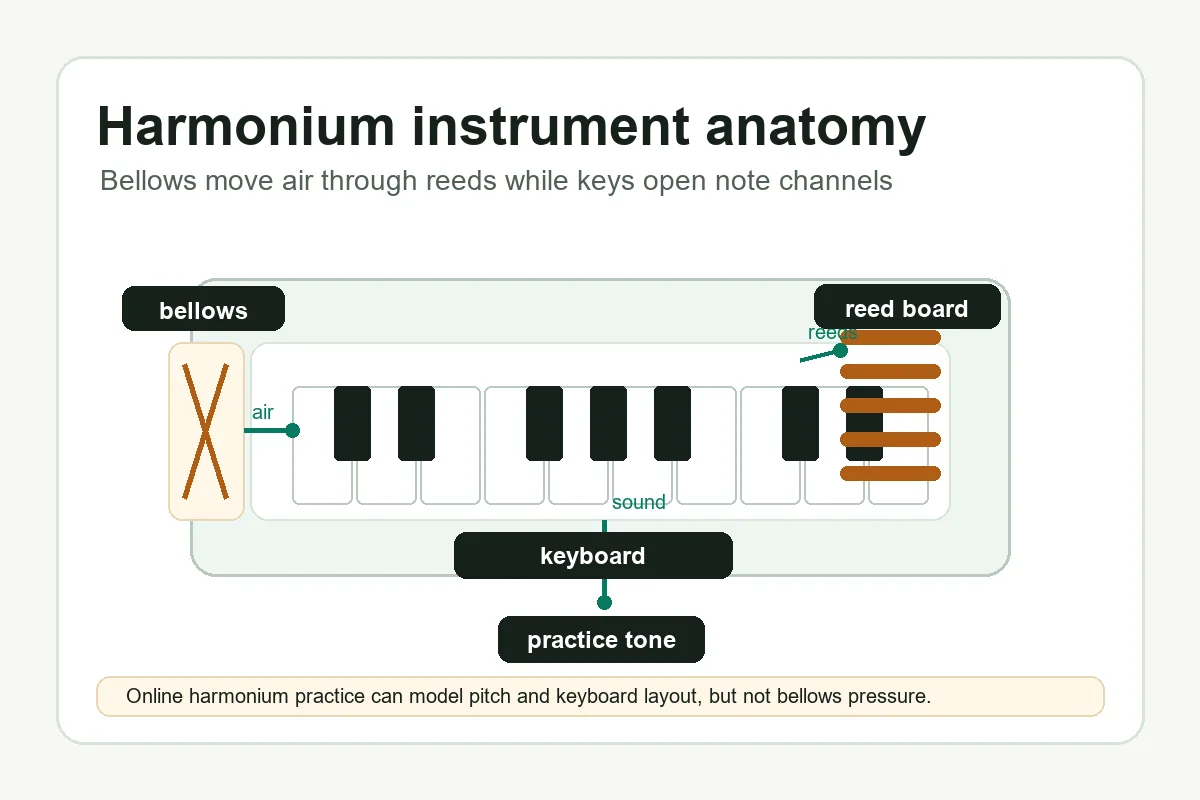
A harmonium is an air-driven free-reed instrument. The keyboard opens valves, the bellows supply air, and metal reeds vibrate inside the reed board. Dust, humidity, rough pumping, and long periods of compression can affect any of those systems. Care is therefore less about polishing the case and more about preventing small problems from reaching the air path.
Start with the least invasive action. Wash and dry your hands, close the stops, remove loose objects from the top, and inspect the instrument in good light. Do not spray cleaner into a slot, drip oil into a reed, or insert a metal tool because you cannot see what is behind the opening. If you are still learning the parts, the harmonium instrument guide explains how bellows, reeds, keys, stops, and the air chamber fit together.
Maintenance also protects your practice time. A clean, stable instrument gives you a more reliable pitch reference for sargam exercises, while an instrument with a leak or a sticky valve can make a correct note sound like a fingering mistake.
How to clean a harmonium without damaging reeds
For routine cleaning, use a soft dry microfibre cloth and a small, clean, soft brush reserved for the instrument. Brush dust away from the keyboard rather than pushing it down between the keys. A vacuum cleaner can create strong suction and static near delicate parts, so do not place a nozzle over reed openings or bellows vents.
Clean the case with a barely damp cloth only when the exterior material allows it, then dry the surface immediately. Keep water, alcohol, furniture polish, disinfectant, and scented oils away from the keyboard gaps, stops, reed board, and bellows cloth. Moisture that looks harmless on a lid can swell wood, loosen glue, or leave residue that changes how a valve closes.
If you see dust inside, stop at the visible edge. Do not remove the reed board just to make the instrument look clean. A technician can open, brush, and reseat the relevant parts while checking for loose valves. Photograph the area before a service visit so the repairer knows what you noticed and which stop or key was involved.
-
1
Prepare a dry work area
Place the harmonium level on a stable table. Wash and dry your hands, remove jewellery that can scratch the case, and keep drinks away.
-
2
Close the instrument
Turn off drones and couplers, close the stops, and let the bellows relax. Never clean while a key is held down.
-
3
Dust from the outside
Use a dry cloth on the lid and sides, then brush around key edges with light strokes that move dust outward.
-
4
Test before storing
Play a small repeatable set of notes. If a note becomes weak, noisy, or slow after cleaning, record it instead of poking the opening.
Avoid compressed air. A forceful jet can drive grit deeper into a valve or bend a reed tongue.
A clean instrument is not the same as a sterile one. Gentle, dry cleaning protects the mechanism better than strong chemicals.
Humidity, temperature, and safe harmonium storage
Stable storage is one of the most valuable forms of harmonium care. Keep the instrument level, covered with a breathable cover, and lifted away from a damp floor. Avoid direct sun, a radiator, an air-conditioner outlet, a bathroom wall, and a car boot that becomes very hot or cold. Sudden changes can move wood joints and alter the way valves seal.
Do not clamp the bellows shut with extra pressure or stack heavy cases on top. Follow the case design and leave the instrument in its normal closed position. If the harmonium is stored for several weeks, open the case occasionally in a dry room and inspect for musty odour, condensation, insects, or fabric that feels damp. Never seal visible moisture inside a case.
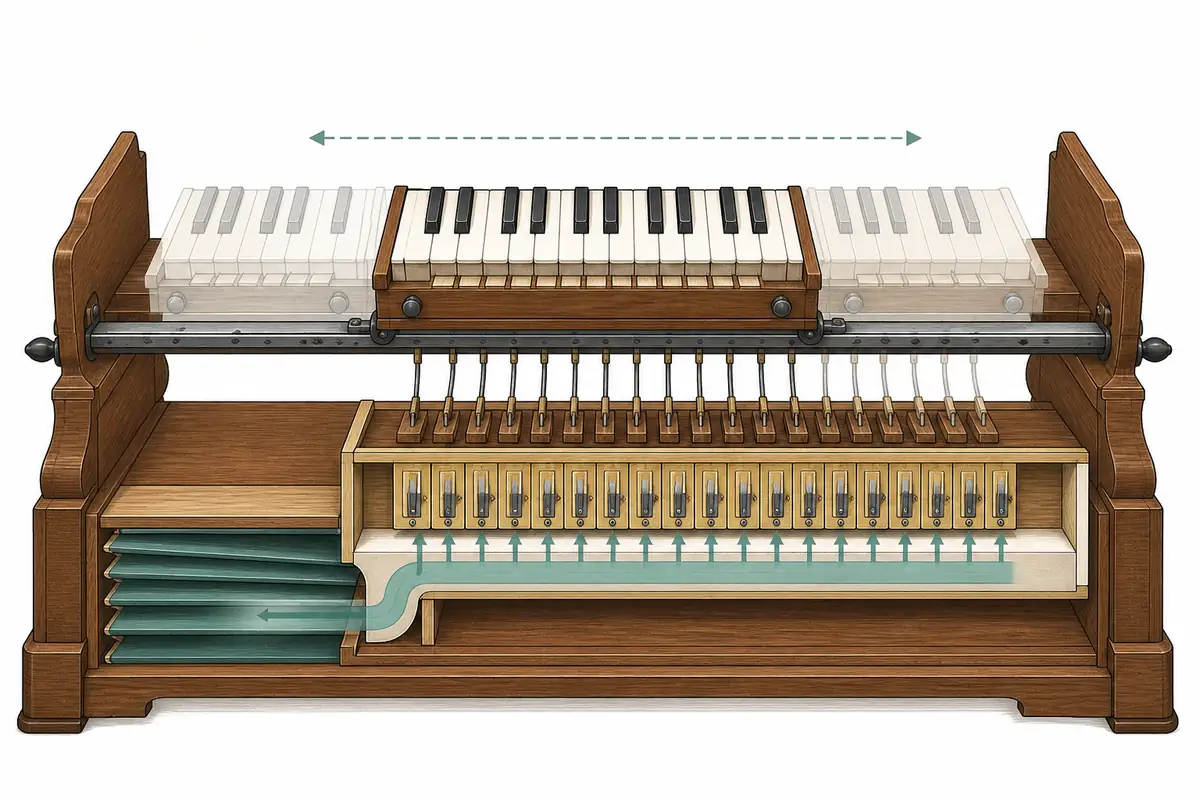
When you travel, support the case from underneath and protect corners from impact. A folding or scale-changer model may have moving parts that need extra care; the scale changer harmonium guide explains why keyboard alignment and mechanism checks matter. Do not assume a padded bag fixes a loose hinge or a bent stop rod.
There is no single perfect humidity number for every case. The practical goal is a stable, moderate room rather than repeated wet-dry swings.
If mould, insects, or water damage is visible, isolate the instrument and ask a repairer how to clean it. Do not spread contaminated dust through the reed board.
Common harmonium problems you can identify safely
A symptom is information, not an invitation to dismantle the instrument. First repeat the same note with the same stop, bellows pressure, and finger position. Then check whether the sound changes when you release and press the key again. Compare a nearby note. This simple method helps separate a playing issue from a mechanical pattern.
A weak sound may come from insufficient air, a partly closed stop, a leak, a valve that is not opening fully, or a reed problem. A buzz may be dust, a loose part, a reed tongue touching its frame, or a panel vibrating. A note that stays sharp or flat may need tuning, but it can also sound wrong because Sa changed or because another reed bank is active. If you are unsure, stop adjusting and keep a short recording for the technician.
Use the harmonium price guide when deciding whether a repair estimate makes sense for an older instrument. Cost depends on the exact leak, reed condition, case work, travel, and local labour; a generic online price cannot diagnose your harmonium.
| Symptom | Safe first check | Do not do |
|---|---|---|
| One note is silent | Try the note with one stop, then compare a neighbouring key. | Do not push a pin or wire into the opening. |
| Buzz or rattle | Close extra stops and listen at a lower volume to locate the area. | Do not tighten hidden screws at random. |
| Air fades quickly | Check that no key or stop is partly open and inspect visible bellows folds. | Do not glue a bellows seam from the outside. |
| Pitch feels uneven | Repeat the same note after the instrument rests and note the setting. | Do not file or bend a reed without training. |
| Sticky key | Look for a visible crumb or object around the key edge. | Do not pour oil or cleaner into the key bed. |
When tuning or repair should be left to a specialist
Harmonium tuning is not the same as turning a household screw. A reed is a small vibrating tongue, and changing its profile or seating can affect pitch, response, and the safety of the surrounding reed. If several notes drift together, one note remains unstable after a careful repeat, or a reed makes a persistent metallic buzz, ask for a harmonium technician rather than trying a tutorial shortcut.
The same boundary applies to bellows leaks, torn cloth, broken hinges, warped panels, loose reed plates, insects, mould, and stops that no longer open or close. A repairer may need to remove the keyboard or reed board, test air pressure, clean valve faces, replace materials, and tune the reeds as a group. Explain the instrument model, how often it is used, the climate, and the exact symptoms.
Before handing it over, take photos of the outside, serial label if present, stop positions, and the problem area. Ask what the estimate includes and whether the work is cleaning, leak repair, reed work, tuning, or cosmetic restoration. A clear diagnosis is more useful than a promise that every harmonium can be made to sound identical.
- Encyclopaedia Britannica: harmonium - Background on the harmonium as a keyboard free-reed instrument.
- Encyclopaedia Britannica: free-reed instrument - Context for how air and vibrating reeds produce sound.
Harmonium maintenance FAQ
How often should I clean a harmonium?
Wipe the outside and keys after regular sessions, then do a careful visible inspection about once a month. Deeper internal cleaning should be scheduled only when dust, insects, moisture, or a sound problem makes it necessary.
Can I use compressed air to clean harmonium reeds?
It is safer to avoid compressed air because a strong jet can push grit into valves or bend a reed tongue. Use a dry soft brush on visible surfaces and ask a technician to open the instrument when internal dust is suspected.
Why does my harmonium sound out of tune after storage?
Temperature and humidity changes, a reed that has shifted, a leak, or an active second reed bank can change what you hear. Repeat a fixed note test and record the setting before asking for tuning.
Should I oil the keys or bellows?
Do not add household oil. Oil can stain cloth, attract dust, and change how valves or key parts move. A specialist can choose the correct repair method after seeing the mechanism.
Is a buzzing harmonium always broken?
No. Dust, a loose panel, a stop combination, a reed edge, or a valve can all create noise. Lower the volume, isolate the note and stop, and avoid bending or filing anything yourself.
Can online harmonium practice help while my instrument is being repaired?
Yes. A browser harmonium can help you check note order, Sa, and short sargam phrases. It does not reproduce bellows pressure, key resistance, reed balance, or the physical feel of a repaired instrument.
Keep the care routine musical
Check one repeatable note pattern, store the instrument steadily, and use the browser harmonium for pitch practice when the physical instrument needs service.
Open the online harmonium